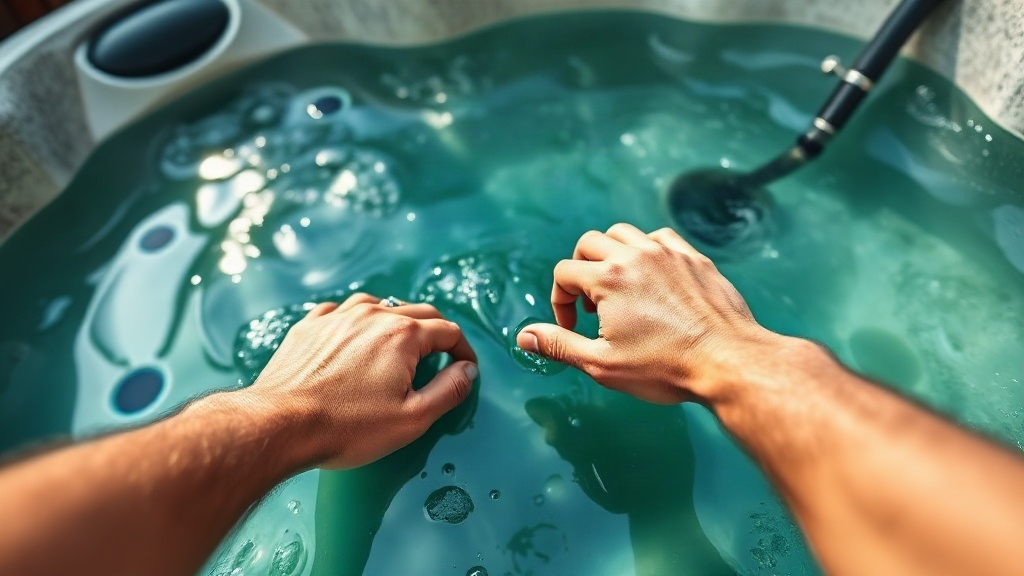
You lift the cover and find green streaks on the shell or cloudy green water staring back at you. Learning how to get rid of algae in hot tub water starts with one key fact: algae need light, warmth, and standing water to bloom, and a covered spa only needs a lapse in sanitizer for a bloom to begin.
Quick answer: Shock the tub with a chlorine or non-chlorine oxidizer, clean the filter, and brush every surface. Then run the jets on high for 30 minutes and repeat the shock in 24 hours if green returns. The sanitizer level matters most: free chlorine should sit at 3–5 ppm.
This guide walks through the full cleanup, from tools you need to mistakes that let algae bounce back. By the end, you will know how to clear a green tub and keep it clear.
What you need before starting
Gather every tool before you touch the water. A half-finished cleanup leaves algae in the plumbing, and it returns within days. Here is the full list:
- Test kit with a chlorine and pH scale — test strips work, but a liquid kit gives more accurate readings.
- Granular chlorine shock (calcium hypochlorite or dichlor) — around 1 ounce per 100 gallons for a standard shock dose.
- Non-chlorine shock (potassium monopersulfate) — an alternative for spa owners sensitive to chlorine.
- Algaecide formulated for spas — check the label says “hot tub” or “spa safe.”
- Filter cleaner — a soak solution, not dish soap.
- Nylon spa brush — nylon is safe on acrylic shells.
- Clean microfiber cloths — one for the shell, one for the cover.
- Five-gallon bucket for mixing.
- Replacement filter cartridge — a spare lets you swap and soak the old one.
Read the water first
Test the water before changing anything. Record free chlorine, pH, alkalinity, and cyanuric acid. Free chlorine near zero with green water confirms a bloom. High cyanuric acid (above 50 ppm) locks chlorine, so a drain may be faster than repeated shocks.
Check the filter and sanitizer type
A clogged cartridge starves the tub of circulation, and algae settles in the media. Confirm you have the right shock for your sanitizer: bromine tubs use a bromine-based shock or non-chlorine oxidizer, while chlorine tubs can use granular chlorine. Mixing the two creates a chemical risk, so read labels first.
Combining different sanitizers in one dose can release dangerous gas. Add one product at a time and let it circulate before the next.
Prepare the area
Remove the cover, set it aside on a clean surface, and clear the deck. You will need access to all four sides of the tub. Have a hose nearby to top off the water after draining.
Step-by-step instructions
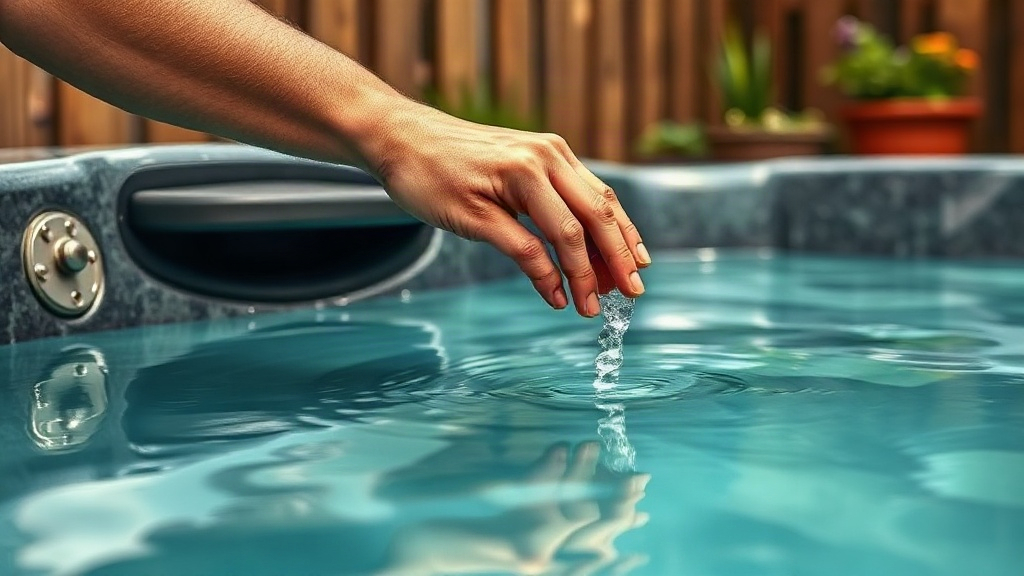
Work through these steps in order. Each one has a clear finish point, so you know when to move on.
Set a timer for the circulation period rather than guessing. Thirty minutes on high with open air controls moves water through every jet line, and a longer run costs nothing but a little pump wear.
Step 1: Remove debris and brush the shell
Skim leaves and grit with a net. Brush the walls, floor, and waterline with the nylon brush, paying attention to corners and jet faces. Finish point: no visible debris, and the shell feels smooth.
Step 2: Shock the water
With the jets running, add granular shock at 1 ounce per 100 gallons. Sprinkle it across the surface rather than in one pile. Keep the cover off for 30 minutes so gas escapes. Finish point: the water turns cloudy or milky, a sign the shock is working.
Step 3: Run the jets and circulate
Run every jet on high for at least 30 minutes. This pushes chlorinated water through the plumbing where algae hides. Open the air controls for maximum flow. Finish point: the water has circulated the full dose.
Step 4: Clean or replace the filter
Pull the cartridge and rinse it with a hose. For a heavy bloom, soak it in filter cleaner for at least an hour, then rinse again. Swap in your spare cartridge while the old one dries. Finish point: water flows freely through the pleats.
Step 5: Wipe the shell and cover underside
Wipe the shell above the waterline with a diluted sanitizer solution on a microfiber cloth. Clean the cover’s underside too. Algae spores cling to damp fabric and drip back into the tub. Finish point: no green film on any surface.
Step 6: Re-test and repeat if needed
After 24 hours, test free chlorine and pH. If green persists, shock again at the same dose and repeat the filter rinse. Finish point: water is clear, and free chlorine holds between 3 and 5 ppm.
Sunlight burns off chlorine fast. Adding shock in the evening lets it work overnight with the cover off.
Tips for better results
A cleanup gets the tub clear. These habits keep it that way.
Log each test result in a notebook or phone note. A written history shows whether chlorine is drifting downward over a week, which is the earliest sign a bloom is building, long before the water turns green.
Rinse the cartridge every two weeks during heavy-use months rather than waiting for the water to cloud. Debris that sits in the pleats feeds bacteria and algae, so a quick rinse now saves a full cleanup later.
Balance the water before you shock
Chlorine performs poorly when pH drifts. Target pH between 7.4 and 7.6 and total alkalinity around 80–120 ppm. Adjust pH first, let it circulate for an hour, then shock. Unbalanced water can leave chlorine half as effective.
Keep sanitizer above the floor
Algae gains a foothold when chlorine drops below 1 ppm for a day or two. Test every other day in heavy-use weeks. Aim for 3–5 ppm free chlorine and dose small amounts often rather than huge doses rarely.
Match the dose to the bloom
Light green streaks need one shock. Pea-soup water may need two or three rounds over a few days, plus a drain if cyanuric acid is high. Check the label for maximum daily dose and never exceed it.
Use the cover sparingly during recovery
A closed cover traps moisture and blocks chlorine gas from escaping after a shock. Leave the cover off for a few hours after dosing. Once the water is clear, open the cover weekly for an hour of airing.
Replace the filter on a schedule
Cartridges last about 12–18 months with regular cleaning. A worn cartridge passes debris back into the water. Keep a spare on hand so you never run the tub with a missing filter.
Spa algaecide slows regrowth but does not kill a bloom on its own. Shock does the killing; algaecide covers the gaps.
Common mistakes to avoid
Most green-water comebacks trace to one of these errors. Each one is easy to prevent once you know it.
Reusing the same cloth on the shell and the cover spreads spores instead of removing them. Keep two microfiber cloths apart, and launder both in hot water after the job, so spores do not sit in the fabric until the next cleanup.
Shocking in full sun wastes most of the dose before it can act. If dusk is not practical, add the shock in the evening or on an overcast day, and keep the cover off long enough for the gas to escape, or you may drain the sanitizer without touching the bloom.
Skipping the filter
Shocking without cleaning the filter leaves algae in the media. The pump pushes spores straight back into the water within hours. Always rinse or soak the cartridge during a cleanup.
Draining and refilling without cleaning
A fresh fill over a dirty shell and cover just seeds the new water. Wipe the shell, clean the cover, and flush the plumbing before refilling. Draining alone solves nothing.
Overdosing chlorine
More is not better. Excess chlorine damages the cover, fades the shell, and irritates skin. Follow the label rate of 1 ounce per 100 gallons for shock, and let the water circulate between doses.
Ignoring pH and alkalinity
High pH weakens chlorine, so a shock may barely register. Check pH before every dose. If you skip this, you may shock three times and still see green.
Leaving the cover on after a shock
Trapped gas etches the cover and stresses the shell. Keep the cover off for at least 30 minutes after any shock dose.
Testing with old strips
Expired strips give false readings. Store them dry and replace them yearly. A misread chlorine level leads to either overdosing or underdosing.
Add each product to the water separately. Mixing shock with algaecide or pH adjuster in a bucket can cause a violent reaction.
FAQ
How long does it take to clear a green hot tub?
A light bloom often clears in 24 to 48 hours after one shock and a filter clean. Heavy green water may take three to five days of repeated shocks, or a full drain and refill if cyanuric acid is high.
Can I use household bleach instead of spa shock?
Bleach works in an emergency, but it adds salt and lacks stabilizer control. Use plain, unscented bleach only, at about 2 cups per 300 gallons, and never mix it with other products. Dedicated spa shock is safer and easier to dose.
Will algae in a hot tub make me sick?
Algae itself is not a known human pathogen, but it signals that sanitizer has failed. Bacteria can thrive alongside it. Do not enter the water until free chlorine holds at 3–5 ppm and the water is clear.
How much does it cost to fix a green hot tub?
Most fixes cost under $40 in shock and filter cleaner. A replacement cartridge runs roughly $30 to $60. A full drain and refill adds only the cost of water and chemicals.
Does algaecide alone kill algae?
No. Algaecide prevents regrowth and weakens algae, but shock is what kills a bloom. Use both together during cleanup, and algaecide alone as a weekly preventative.
Conclusion
Clearing green water comes down to four moves: shock, circulate, clean the filter, and wipe every surface. Keep free chlorine at 3–5 ppm and pH near 7.4–7.6, and algae rarely gets a foothold. Most problems trace to a skipped filter cleaning or a cover left on too long.
Test your water now and note the free chlorine reading. If it sits below 1 ppm, shock the tub tonight and rinse the filter before you close the cover.