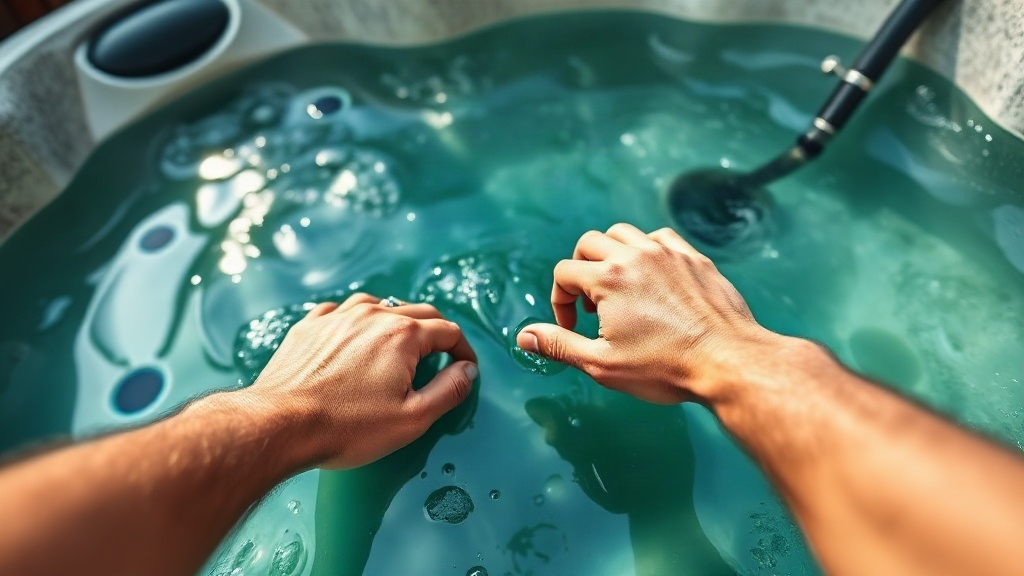
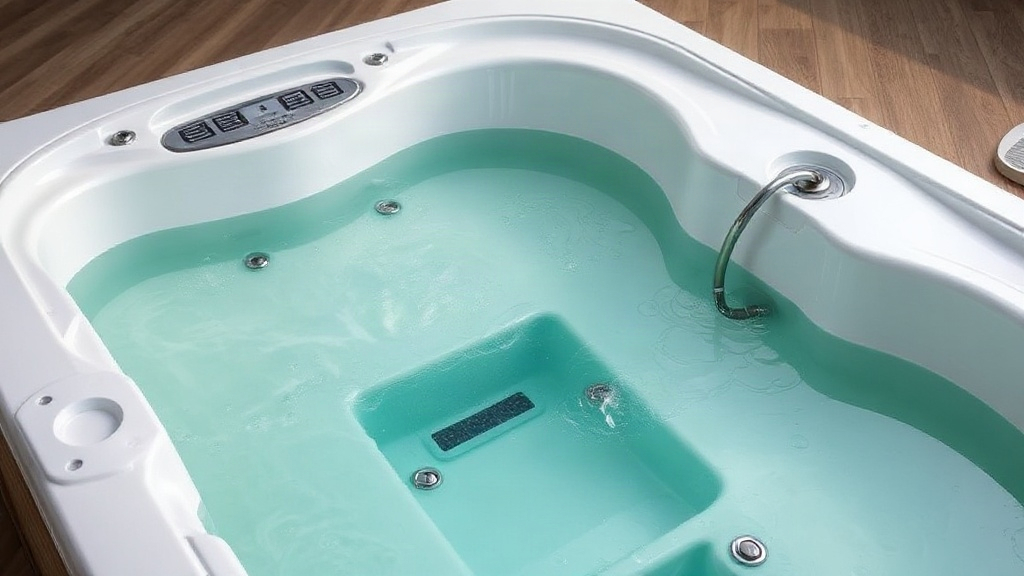
You lift the cover, expecting clear, sparkling water, and find a greenish tint instead. Your first test strip shows the sanitizer level sitting near zero. That combination of color and low sanitizer is one of the most common hot tub problems, and it rarely fixes itself.
Quick answer: Green hot tub water low sanitizer almost always means algae or organic waste has taken hold because there was not enough chlorine or bromine to stop it. Shock the tub with a high dose of sanitizer, clean the filter, and retest within 24 hours. Do not drain the tub until you confirm the sanitizer holds a steady reading.
This guide explains what causes the problem, why it matters for your equipment and your skin, and the exact steps that clear the water and keep it clear.
What is green hot tub water low sanitizer?
Green water and a low sanitizer reading are two symptoms of the same failure. A hot tub holds 300 to 500 gallons of warm water, usually between 100°F and 104°F. That heat speeds up how quickly chlorine or bromine gets used up. When sanitizer drops near zero, bacteria, algae spores, and organic matter from sweat and lotions multiply fast.
Sanitizer is the chemical that kills microorganisms and oxidizes waste. Chlorine is the most common choice, though bromine works the same way at a slower kill rate. A healthy hot tub usually holds 1 to 3 ppm of free chlorine or 3 to 5 ppm of bromine. When the reading stays at zero for even a day or two, the water can turn cloudy first and green soon after.
That timing matters because the green stage is not the start of the problem, only the visible part. Cloudiness, a faint chlorine smell, and fast-dropping test readings are earlier signals. Catching the reading at zero before the color shifts makes the fix a single shock instead of a multi-day cleanup.
What the green color actually tells you
Green water can come from three main sources:
- Algae growth, which turns water cloudy green and often coats surfaces with a slimy film
- Copper in the water, usually from corroded heater parts, which tints water blue-green
- Organic buildup, such as pollen or lotion residue, which turns water dull and murky
The sanitizer reading helps you tell them apart. Algae usually appears with a near-zero sanitizer level. Copper problems often show up while sanitizer is normal.
How low sanitizer triggers the whole chain
A hot tub loses sanitizer constantly. Sunlight destroys chlorine. Heat burns it off faster than cool water does. Bathers use it up when sweat and body oils react with the sanitizer. If the feed rate, chemical dose, or filter is not keeping up, the level falls. Once it hits zero, algae has nothing standing in its way.
A clear emerald tint with normal sanitizer more likely points to copper. Test for metals before you shock the tub repeatedly, or you will waste chemicals on the wrong problem.
The key takeaway: treat the color and the reading together. Each one gives you half the diagnosis.
Why green hot tub water low sanitizer matters
Letting a green tub sit is not merely a cosmetic issue. The same conditions that grow algae also let harmful bacteria thrive. Pseudomonas aeruginosa causes hot tub folliculitis, an itchy rash that shows up a day or two after soaking. Legionella bacteria can survive in warm, under-sanitized water. A tub reading near zero is a health risk, not just an eyesore.
Money matters too. Algae and low sanitizer leave scale, biofilm, and stains that shorten the life of filters, heaters, and jets. Biofilm, a slimy layer of bacteria that sticks to pipes, is especially stubborn. Once it forms inside plumbing, normal chlorine doses bounce off it. Clearing biofilm can take repeated shock treatments over days.
Pipes and jet internals are where neglect shows up first. Biofilm protects bacteria from sanitizer, so the problem hides in plain sight while the water looks only slightly dull. By the time the tint turns obvious, the coating is usually well established and needs mechanical cleaning, not just chemistry.
Equipment and cost effects
- Filters clog faster and need replacement sooner when algae is present
- Heaters corrode when water chemistry swings, and a failed heater can cost several hundred dollars to replace
- Pumps and jets work harder against debris, which raises energy use
- Chemicals get used up trying to fix a problem that a steady sanitizer level would have prevented
The bather experience
Cloudy or green water ruins the reason you own a hot tub. People skip soaking, guests are put off, and the tub sits unused for weeks. A tub left untreated at low sanitizer will usually get worse, not better, because warm water keeps feeding the growth.
Skip the soak until sanitizer holds a steady reading for at least a day and the water is clear. A rash or infection is far more costly than one missed evening.
The key takeaway: green water is a warning about water safety and equipment health at the same time. Fix it quickly and treat prevention as routine maintenance.
Best practices
Clearing and preventing this problem follows a predictable sequence. Work through the steps in order, because shocking a dirty filter just wastes the dose.
Two habits catch most problems early. First, test right after heavy bather loads rather than waiting for the weekly check, since sweat and lotion can drop sanitizer fast. Second, note how many days a dose lasts. If your normal dose now holds for half as long, something is consuming chlorine, and it is cheaper to investigate than to keep pouring in chemicals.
Keep a simple log of readings and doses. Patterns emerge quickly, such as a pH creep or a filter that clogs every week, and the log shows you exactly when to act.
Step-by-step recovery
- Test and record free chlorine or bromine, pH, and alkalinity before you add anything
- Clean or replace the filter so it can catch dead algae and debris
- Shock the tub with a high dose of chlorine or a non-chlorine shock if your sanitizer system uses one
- Run the pump and jets for several hours so treated water reaches every pipe
- Brush the shell and waterline to loosen algae clinging to surfaces
- Retest after 24 hours and repeat the shock if sanitizer will not hold
Daily and weekly habits
Keep pH between 7.2 and 7.6 and total alkalinity between 80 and 120 ppm. Chlorine works poorly outside that pH range, so a balanced tub keeps sanitizer effective longer. Add a small maintenance dose after heavy use, and run the filter at least four to six hours a day. Clean the filter every two to four weeks for a residential tub.
When to drain and refill
If the water is deep green, smells off, or sanitizer will not hold after two shocks, drain and refill. Most manufacturers suggest a full water change every three to four months with normal use. A refill is quicker than fighting biofilm in old water.
The key takeaway: shock first, clean the filter, and only drain when the water will not recover. Consistent testing after each step is what confirms the fix.
Common mistakes to avoid
Most repeat green-water problems trace back to a handful of easy-to-fix errors. Knowing them saves chemicals and frustration.
- Adding sanitizer without testing pH first. Chlorine loses much of its killing power at high pH. Adjust pH before you shock.
- Treating once and stopping. Algae returns fast if you skip the follow-up test the next day.
- Ignoring the filter. A clogged cartridge holds dead algae and feeds the problem back into the water.
- Overdosing to “be safe.” Too much chlorine damages covers, pillows, and heater parts. Follow the label dose for your tub size.
- Skipping the waterline and pipes. Algae hides in jets and behind the skimmer. Brush and flush those areas.
- Assuming clear water means safe water. Sanitizer can crash between soaks without any visible change.
Stabilized chlorine holds up better in sunlight but can lock up chlorine over time. If your tub uses it, watch the level and replace water when it climbs too high.
The key takeaway: most failures come from skipping steps, not from bad chemicals. Follow the full sequence and test at each stage.
Another frequent error is trusting test strips that have sat in a hot garage or expired months ago. Strips lose accuracy over time, and a false “safe” reading lets you skip a dose you actually needed. Store strips sealed and dry, and replace them yearly. When a reading looks suspicious, confirm it with a liquid test kit before adding anything.
Neglecting circulation is just as common. Many owners shock the water but leave the cover on and the pump off, so the dose never reaches the plumbing. Run the jets with the cover open for at least an hour after shocking to let off-gassing escape and treated water move through every line.
Finally, adding chemicals in the wrong order causes problems. Alkalinity first, then pH, then sanitizer, and shock last. Dumping everything in at once can create cloudy water and wasted product.
FAQ
How long does it take to clear green hot tub water?
Most mild cases clear within 24 to 48 hours after a proper shock and filter cleaning. Heavy algae with biofilm can take several days and repeated doses. If the water is still green after two rounds, drain and refill.
Can I use the hot tub right after shocking it?
Wait until free chlorine drops back to 1 to 3 ppm or bromine to 3 to 5 ppm. That usually takes 8 to 24 hours. High sanitizer levels irritate skin and eyes, so always retest before soaking.
Is green water always algae?
No. Copper from a failing heater tints water green while sanitizer stays normal. Test for metals before repeated shocks. A clear green with steady sanitizer points to metal, not algae.
How much does it cost to fix a green hot tub?
A shock treatment and new filter cartridge typically cost under $50 total. A drained heater or pump repair runs into the hundreds. Quick action keeps the fix on the cheap end.
Conclusion
Green water paired with a low sanitizer reading is a fixable problem, not a lost tub. The pattern is consistent: sanitizer fell, organic matter took over, and the filter could not keep up. Shock the tub, clean the filter, balance pH, and retest the next day. Drain only when the water refuses to recover.
Start today by testing your water and writing down the readings. That single habit tells you whether your sanitizer is holding or slipping, and it turns a recurring headache into a five-minute routine you barely think about.