
Cyanuric acid (CYA) plays a crucial role in maintaining balanced spa water. It is often called a “stabilizer” or “conditioner” because it helps protect chlorine from rapid degradation due to UV rays. When looking to raise cyanuric acid levels in a spa, it’s important to monitor the current levels and add the appropriate amount of CYA. Without proper levels of CYA, chlorine quickly dissipates, making spa maintenance more difficult and leading to water quality issues. Keeping CYA levels in check ensures that your spa remains clean and inviting.
For spa owners, maintaining optimal cyanuric acid levels is essential to ensuring effective chlorine performance and preventing algae and bacterial growth. If CYA levels are too low, chlorine evaporates too quickly; if too high, it reduces chlorine’s effectiveness. This balance is critical for a safe and healthy spa experience.
Ideal Cyanuric Acid Levels for Spas
Unlike swimming pools, which typically require a CYA level of 30-50 ppm, spas require slightly lower concentrations due to their smaller water volume and higher temperature. The recommended CYA levels for a spa typically range between 20-40 ppm.
Maintaining this balance ensures that chlorine remains active long enough to sanitize the water while avoiding overstabilization, which can lead to ineffective sanitation.
Why Cyanuric Acid Levels Drop in a Spa
Cyanuric acid does not evaporate like chlorine, but its levels can decrease due to:
- Dilution from fresh water – Adding water to your spa from refills or rain can reduce CYA concentrations.
- Drainage and refills – Every time you partially or fully drain your spa, CYA levels will drop.
- Splash-out and overflow – Water splashed out of the spa takes CYA with it, reducing its concentration over time.
- Filtration and cleaning – Some filtration systems, especially those with activated carbon, may remove CYA from the water.
If you notice that your cyanuric acid levels have dropped below the recommended range, it’s time to take action.
How to Raise Cyanuric Acid Levels in Spa
If your cyanuric acid levels are too low, follow these steps to safely increase them:
1. Use Cyanuric Acid Stabilizer
The most direct way to increase cyanuric acid in a spa is to add a cyanuric acid stabilizer. These are available in granular or liquid form and can be found at most pool and spa supply stores.
How to Add Cyanuric Acid Stabilizer:
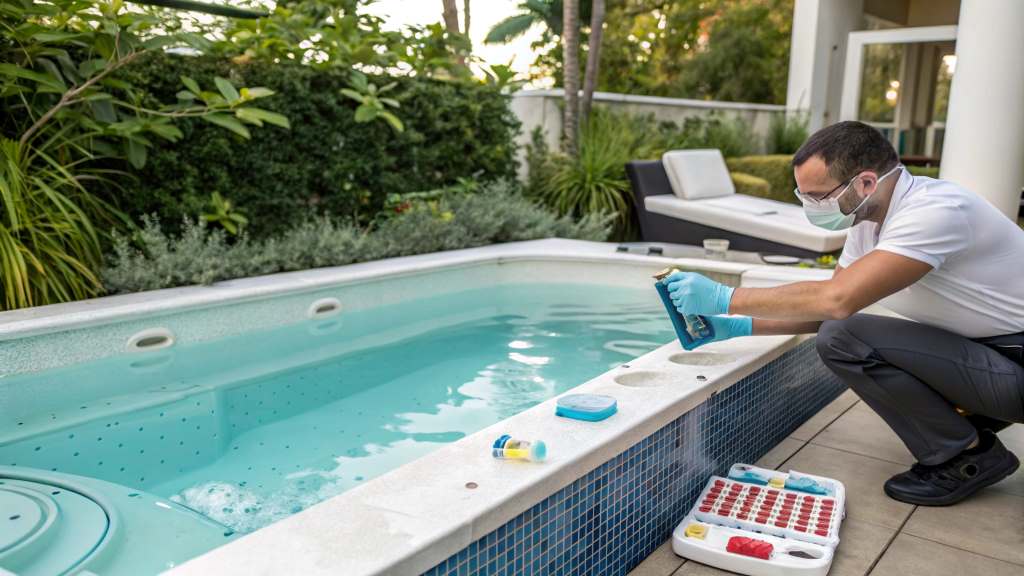
- Test Your Water – Use a reliable CYA test kit to measure current levels.
- Calculate the Required Amount – A general rule is that 1 ounce of cyanuric acid raises CYA levels by about 10 ppm in 100 gallons of water.
- Pre-Dissolve the Stabilizer – If using granular CYA, dissolve it in a bucket of warm water before adding it to the spa to prevent residue buildup.
- Slowly Add to the Spa – Pour the solution into the water near the return jets while the spa is running.
- Wait and Retest – Let the water circulate for at least 24 hours before testing again.
2. Use Stabilized Chlorine
Another way to gradually raise cyanuric acid levels is by using stabilized chlorine, such as:
- Trichlor tablets
- Dichlor granules
How Stabilized Chlorine Works:
- Dichlor (Sodium Dichloro-S-Triazinetrione) contains about 55-62% chlorine and 50-60% cyanuric acid.
- Trichlor (Trichloro-S-Triazinetrione) contains about 90% chlorine and 50% cyanuric acid, making it highly concentrated.
When added to spa water, these chlorine sources slowly increase CYA levels over time.
Pro Tip: If your spa already has high chlorine levels but low CYA, avoid Trichlor as it will over-chlorinate the water. Instead, use Dichlor, which dissolves faster and allows for better CYA adjustments.
3. Minimize Water Loss
Preventing unnecessary water loss can help maintain stable CYA levels. To do this:
- Use a spa cover to prevent excessive evaporation and water dilution from rain.
- Limit splashing to reduce water loss.
- Check for leaks that might be causing unintended water replacement.
By maintaining water consistency, you can reduce the need for frequent CYA adjustments.
How Long Does It Take for Cyanuric Acid to Dissolve?
Cyanuric acid is slow-dissolving, especially in granular form. It can take 12-24 hours to fully integrate into the water. During this time, avoid adding too much at once—CYA does not evaporate and overdosing can only be corrected by draining and diluting.
What Happens if Cyanuric Acid Levels Are Too High?
Overstabilization of chlorine occurs when CYA levels exceed 50 ppm in a spa. This results in:
- Chlorine Lock – High CYA makes chlorine ineffective, leading to cloudy or unsanitized water.
- Increased TDS (Total Dissolved Solids) – Excess stabilizer contributes to water imbalance.
- Risk of Draining – The only way to lower CYA is through partial water replacement.
If you suspect high CYA levels, test your water and perform a partial drain and refill to bring the levels back into the optimal range.
FAQs
How often should I check cyanuric acid levels in my spa?
You should test cyanuric acid levels at least once a month. More frequent checks are recommended if you frequently add water to your spa.
Can I use baking soda to raise cyanuric acid levels?
No, baking soda increases alkalinity but does not affect cyanuric acid levels. Use a CYA stabilizer or stabilized chlorine instead.
What happens if I don’t maintain cyanuric acid in my spa?
Without proper CYA levels, chlorine dissipates rapidly, making it difficult to maintain sanitized water. This can lead to bacterial growth and algae formation.
Does cyanuric acid affect pH levels?
Cyanuric acid is slightly acidic and can lower pH levels over time. Always check and adjust pH after adding CYA.
How do I remove excess cyanuric acid from my spa?
The only way to lower high CYA levels is through draining and refilling. Test your water and replace a portion of the spa water to dilute excess stabilizer.
Final Thoughts
Maintaining proper cyanuric acid levels in your spa is key to water sanitation and chlorine efficiency. Whether using a stabilizer or stabilized chlorine, always monitor CYA levels to keep them within the recommended range of 20-40 ppm.
By following the steps, you can raise cyanuric acid levels in spa. Then, you’ll enjoy clearer, safer, and longer-lasting spa water without unnecessary chemical adjustments.