

Yes, AI adaptive massage could change your wellness routine by making massage more personalized, responsive, and consistent. Instead of following fixed programs, adaptive systems can adjust pressure, movement, timing, and focus using real-time feedback. Massage already reaches millions of Americans, while 94% of surveyed consumers believe it can reduce pain.
Why Massage Is Ready For A Smarter Approach
Traditional massage depends heavily on communication, therapist experience, and your ability to describe discomfort. Those factors matter, but they cannot always capture subtle changes during a session. AI adaptive massage introduces another layer by continuously interpreting available feedback and adjusting the experience.
For example, your shoulders might tolerate firm pressure initially, then become sensitive after several minutes. A responsive system could recognize that change and reduce intensity before discomfort becomes distracting. Therefore, the experience becomes less about following instructions and more about responding to your body’s changing needs.
The technology also reflects a broader shift toward personalized wellness. Current massage research shows that 71% of massage consumers used massage for health or medical reasons during the latest survey period.
What Is AI Adaptive Massage?
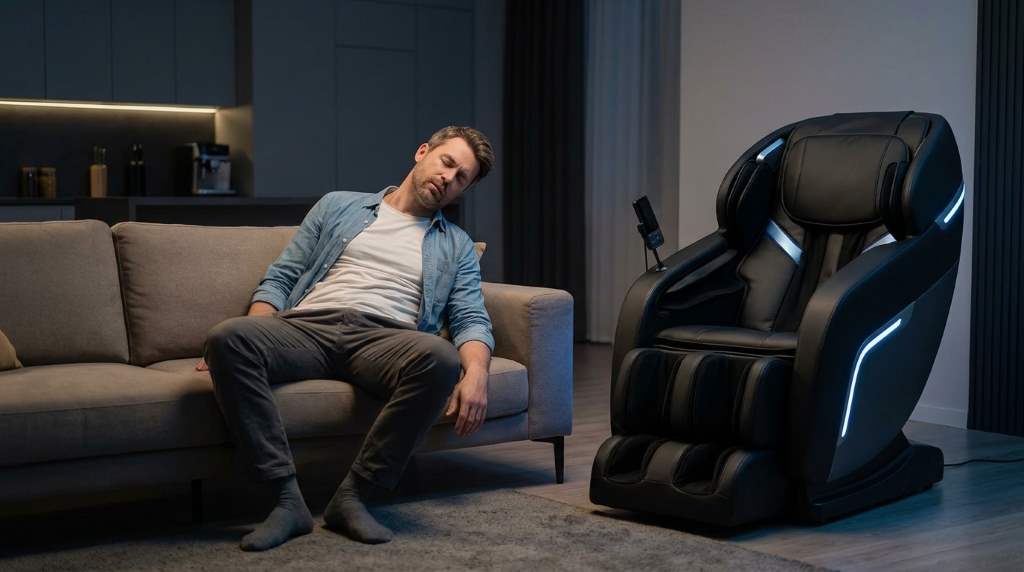
AI adaptive massage combines artificial intelligence, sensors, massage hardware, and feedback systems to personalize massage delivery. Unlike a preset massage chair, the system can potentially modify its approach while the session continues.
Imagine beginning with moderate pressure across your upper back. The system observes pressure distribution, movement patterns, selected preferences, and other available signals. Then, it can modify the next movement according to your response.
That approach resembles how an experienced therapist adapts manually. However, software can record patterns across sessions and use previous preferences when designing future routines.
Some emerging systems combine pressure sensors, motion tracking, physiological monitoring, and AI-based control. Recent intelligent massage research even describes feedback loops that can adjust force, direction, timing, and application areas during treatment.
This distinction matters because personalization does not simply mean choosing a relaxation mode. True adaptation means the massage itself can respond when your body or preferences change.
For example, someone who prefers gentle neck work could receive lighter pressure there. The same person might still receive stronger work across larger back muscles when appropriate.
If facial tension concerns you, understanding choosing the best face massage can provide useful context. Facial massage requires different pressure expectations than broader body massage.
How AI Could Personalize Every Massage Session
The biggest advantage of adaptive massage involves personalization that develops instead of remaining fixed. A system could potentially learn which pressures, rhythms, durations, and areas produce your preferred response.
Think of each session as another conversation between your body and the technology. Your previous feedback becomes useful information instead of disappearing when the session ends.
1. Pressure Can Become More Precise
Pressure remains one of the most important variables in massage quality. Too little may feel ineffective, while excessive pressure can create unnecessary discomfort.
Adaptive systems can use pressure sensing to identify how force distributes across different body areas. Consequently, the system may deliver more controlled pressure rather than applying one intensity everywhere.
2. Massage Timing Can Match Your Response
Not every body area needs identical treatment time. A tense shoulder may deserve more attention than an already relaxed forearm.
AI could help prioritize areas based on your selected goals and session feedback. As a result, each minute may become more purposeful instead of following a rigid sequence.
3. Your Preferences Can Become Persistent
Imagine never needing to explain your preferred pressure at every appointment. A connected system could remember settings such as intensity, duration, preferred regions, and session goals.
Over time, those preferences could create a personal massage profile. However, you should always retain control over stored data and personalization settings.
4. Different Days Could Produce Different Sessions
Your ideal massage after exercise may differ from your preferred massage after a stressful workday. Adaptive technology could account for that difference when sufficient feedback becomes available.
Therefore, personalization could become situational rather than permanently locked to one profile. That flexibility may make regular massage more useful for changing lifestyles.
What Could AI Adaptive Massage Do For Your Daily Life?
AI adaptive massage could influence more than the massage itself. Its greatest impact may come from making personalized recovery easier to repeat consistently.
For busy people, consistency often matters more than finding one perfect session. A system that reduces setup and personalization effort could make wellness easier to maintain.
Consider someone who spends long hours at a desk. Their preferred session might focus on the neck, shoulders, upper back, and arms without treating every region equally.
Another person might prioritize post-workout recovery and prefer different timing or pressure. Adaptive technology could potentially support both patterns without forcing identical routines.
This flexibility could also reduce decision fatigue. Instead of repeatedly selecting complicated programs, users could establish broad goals and refine preferences through feedback.
However, adaptive massage should complement healthy habits rather than replace them. Movement, sleep, hydration, appropriate exercise, and professional healthcare remain important parts of overall wellness.
A More Personalized Morning
A short adaptive session could become part of a morning routine. Gentle settings might help you transition into the day without demanding a lengthy appointment.
Over time, consistency could make the routine feel automatic. That convenience may encourage people to prioritize recovery before discomfort becomes disruptive.
A Better Post-Workout Routine
Exercise can leave different muscle groups feeling very different from one session to another. Adaptive massage could potentially emphasize areas receiving the greatest workload.
Still, users should avoid treating automated massage as injury diagnosis or medical treatment. Persistent pain requires appropriate evaluation from a qualified healthcare professional.
A Calmer Evening Routine
Evening massage could focus on comfort, slower movement, and lower intensity. The goal would shift from physical stimulation toward relaxation and routine consistency.
That distinction matters because effective massage does not always mean stronger massage. Sometimes, a calmer session better matches what your body needs.
AI Adaptive Massage Versus Traditional Massage
AI adaptive massage should not be viewed as a simple replacement for human therapists. Instead, each approach offers strengths that appeal to different situations.
Traditional massage provides human observation, tactile judgment, communication, and emotional awareness. A skilled therapist can notice details that sensors or algorithms may miss.
AI systems offer repeatability, data processing, personalization, and automated consistency. They may also deliver the same customized routine without requiring another appointment.
Therefore, the better choice depends on your goal, circumstances, preferences, and the quality of the technology involved.
| Feature | AI Adaptive Massage | Traditional Massage |
|---|---|---|
| Personalization | Can learn digital preferences | Relies on therapist knowledge and communication |
| Real-Time Adjustment | Can use sensor feedback | Uses human observation and touch |
| Consistency | Highly repeatable settings | Can vary between sessions |
| Human Interaction | Limited or absent | Central to the experience |
| Availability | Potentially convenient at home | Usually requires scheduled access |
The strongest future may involve cooperation rather than competition. Therapists could use technology to understand pressure patterns, document preferences, and improve consistency.
Meanwhile, consumers could use adaptive devices between professional sessions. That combination could provide convenience without losing the judgment of qualified practitioners.
Why Adaptive Massage Could Feel More Natural
Traditional automated massage often follows predetermined paths. Adaptive systems aim to make those paths responsive instead of treating every body identically.
This difference can make technology feel less mechanical. When pressure changes according to feedback, the experience may resemble a responsive interaction rather than a programmed sequence.
For comparison, cold-based wellness experiences follow different principles from massage. Exploring cryotherapy versus traditional spa massage shows why recovery technologies should not be treated as interchangeable.
Adaptive massage occupies an interesting middle ground between technology and traditional hands-on wellness. It uses measurable information while still pursuing familiar goals such as relaxation and comfort.
The Feedback Loop Changes Everything
A feedback loop allows technology to observe, interpret, act, and reassess. That cycle creates the foundation for genuinely adaptive massage.
Suppose pressure increases and your feedback indicates discomfort. The system could potentially reduce force or change the movement pattern.
Then, if your response improves, it could maintain the revised setting. This process makes each adjustment meaningful rather than arbitrary.
Personalization Can Become More Predictive
Future systems may learn patterns from repeated sessions. They could potentially recognize which settings usually produce higher satisfaction for specific circumstances.
However, predictive personalization requires responsible data handling. Users should understand what information the system collects, stores, shares, and deletes.
How Head And Scalp Massage Could Benefit From Adaptation
The head and scalp present another interesting opportunity for responsive massage technology. Pressure tolerance varies considerably across the scalp, temples, forehead, and neck.
A system that recognizes preferred intensity could make sessions more comfortable. It could also help users avoid repeatedly selecting settings that feel too aggressive.
If you enjoy scalp-focused relaxation, comparing Korean head spa versus traditional scalp massage can clarify different approaches.
Adaptive technology could eventually combine scalp massage with broader relaxation routines. That possibility creates a more integrated experience rather than treating every massage area separately.
Why Scalp Personalization Matters
The scalp contains areas where excessive pressure can quickly become uncomfortable. Therefore, adaptive control could be especially useful when users have different sensitivity levels.
Gentler settings may suit relaxation-focused sessions, while stronger techniques might appeal to users who prefer noticeable stimulation. The important factor remains controlled adjustment rather than maximum intensity.
The Privacy Question You Should Not Ignore
Personalization requires information, and that creates an important privacy conversation. Massage technology may collect preferences, session history, sensor readings, or other wellness-related information.
Before buying an adaptive device, read its privacy policy and understand its data practices. Look for clear controls covering storage, deletion, sharing, and account access.
Also, avoid assuming that more collected information automatically produces better massage. A trustworthy system should explain why it needs particular data.
- Check whether the device stores session history.
- Review whether cloud accounts remain optional.
- Understand which sensors collect personal information.
- Look for clear deletion controls.
- Choose products with transparent privacy documentation.
Privacy should remain part of your purchasing decision. Convenience becomes less valuable when users cannot understand how their personal information travels.
Safety Should Come Before Intelligence
AI can optimize patterns, but intelligence does not automatically guarantee safety. Sensors can fail, algorithms can misinterpret signals, and hardware can malfunction.
Choose systems with adjustable intensity, emergency controls, physical safeguards, and clear operating instructions. Never assume automated equipment can identify every medical contraindication.
People with unexplained pain, recent injuries, certain medical conditions, or unusual symptoms should seek professional guidance. Massage technology should support informed wellness decisions, not replace medical assessment.
Use Adaptive Massage Responsibly
Start with conservative settings when using unfamiliar equipment. Increase intensity gradually only when the experience remains comfortable.
Stop immediately if you experience sharp pain, numbness, dizziness, unusual weakness, or other concerning symptoms. Comfort should guide ordinary wellness use, while persistent symptoms deserve professional attention.
How To Choose An AI Adaptive Massage System
Not every product marketed as intelligent provides meaningful adaptation. Some devices simply rename preset programs with modern technology language.
Look for evidence of genuine feedback and adjustment. The system should explain what it senses and how those signals influence massage delivery.
- Real-time sensing: Look for pressure or motion feedback rather than preset-only programs.
- Adjustable control: Confirm that you can modify intensity and session boundaries.
- Personal profiles: Check whether the system remembers your preferences.
- Safety controls: Look for emergency stops and sensible intensity limits.
- Privacy controls: Review storage, sharing, account, and deletion options.
- Transparent claims: Avoid products promising medical outcomes without credible support.
Also consider whether you actually need AI. A reliable conventional massage chair may offer better value if personalization is not important.
Technology should solve a real problem rather than create another complicated device in your home. The best purchase delivers useful adaptation without unnecessary complexity.
What Your Future Massage Routine Could Look Like
Imagine starting a session by selecting one simple goal: relaxation, recovery, comfort, or general wellness. The system reviews your saved preferences and begins conservatively.
During the session, sensors monitor relevant feedback and adjust pressure or movement. You can still override the system whenever the experience feels inappropriate.
Afterward, the device records your voluntary feedback and improves future recommendations. Eventually, every session could become more individualized without requiring complicated manual setup.
That future feels significant because personalization becomes invisible. Instead of constantly controlling technology, you simply experience a routine that gradually fits you better.
Will AI Replace Massage Therapists?
No, AI adaptive massage is unlikely to eliminate the need for skilled massage therapists. Human therapists provide judgment, communication, touch sensitivity, and individualized observation that automated systems cannot fully reproduce.
Instead, AI may handle repetitive personalization while therapists focus on higher-value human decisions. Technology could also help therapists analyze sessions and understand client preferences more systematically.
The massage profession itself continues to operate across homes, clinics, spas, and other settings. Current industry data estimates more than 355,000 massage therapists working nationally.
That workforce suggests technology will likely become another tool within the broader wellness ecosystem. The most useful innovation should strengthen human care rather than remove meaningful human interaction.
The Real-Life Changes You May Notice
The most important change may not feel futuristic at all. You may simply notice that your massage routine becomes easier to personalize and repeat.
You could spend less time choosing programs and more time enjoying the experience. You might also discover patterns in how different settings affect your comfort and relaxation.
Over months, those small improvements could create a more intentional wellness routine. Consistency can become easier when technology reduces friction around personalization.
Still, the phrase “change your life forever” deserves realistic interpretation. AI adaptive massage cannot transform every aspect of health, but it could reshape how you approach regular self-care.
Final Verdict: Is AI Adaptive Massage Worth Watching?
AI adaptive massage represents a meaningful evolution from fixed automated routines toward responsive personalization. Its strongest promise comes from combining sensors, artificial intelligence, user feedback, and adjustable massage control.
The technology could make massage more convenient, consistent, and individually responsive. However, quality, privacy, safety, and realistic expectations will determine whether those benefits become genuinely useful.
If you want to explore this technology, start by identifying your actual wellness goal. Then compare adaptive features, safety controls, privacy practices, customization options, and independent product evidence before buying.
Ultimately, the best massage technology should disappear into the experience. If it helps you feel more comfortable, more consistent, and more in control, it earns a place in your routine.
Frequently Asked Questions
What Is AI Adaptive Massage?
AI adaptive massage uses sensors, software, and automated controls to personalize massage based on feedback and preferences.
Can AI Adaptive Massage Adjust Pressure?
Yes, suitable systems can adjust massage pressure according to sensor readings, selected preferences, and real-time feedback.
Is AI Adaptive Massage Safe?
It can be safe when designed properly, used correctly, and supported by appropriate intensity limits and safety controls.
Can AI Replace A Professional Massage Therapist?
No, AI cannot fully replace the judgment, communication, tactile assessment, and human interaction provided by skilled therapists.
Should You Buy An AI Massage Device?
Consider buying one if personalized automation, convenience, repeatability, and adjustable massage settings match your wellness needs.
Take The Next Step
AI adaptive massage is moving massage technology toward a more responsive and personalized future. Start by defining what you want from massage, then choose technology that supports that goal responsibly.
Before purchasing, compare adaptive capabilities instead of focusing only on the number of programs. Most importantly, prioritize comfort, safety, privacy, and meaningful personalization over flashy artificial intelligence claims.
If the technology can make your routine easier without taking away your control, it may become a valuable part of modern self-care. Your best starting point is simple: choose smarter personalization, but keep human judgment at the center.